
A regular roof maintenance plan can prevent small problems from becoming expensive repairs. London roofs face frequent rain, strong winds, falling leaves, moss growth and changing temperatures throughout the year. Without regular checks, blocked gutters, cracked flashing and damaged tiles can allow water into the property.
This guide explains what homeowners should inspect during each season, how to maintain flat and pitched roofs, and when it is safer to call an experienced roofing contractor.

Why Roof Maintenance Matters
Most serious roof problems begin as small defects. A loose tile, a blocked outlet or a small split in flashing may appear minor, but repeated rainfall can allow water to travel into timber, insulation and internal ceilings.
Early checks help identify weak areas before water enters the property.
Keeping the roof dry reduces the risk of rot and structural damage.
Small repairs can prevent premature replacement.
Planned maintenance is usually less expensive than urgent work.
Clear gutters and outlets allow rainwater to leave the roof safely.
Removing debris and checking roofline components keeps the property tidy.
Seasonal Roof Maintenance Schedule
| Season | Main checks | Why it matters |
|---|---|---|
| Spring | Inspect winter damage, clear gutters, check flashing | Find damage caused by storms and cold weather |
| Summer | Repair small defects, inspect flat roofs and roofline | Dry weather is useful for planned maintenance |
| Autumn | Remove leaves, clean outlets and downpipes | Prepare drainage before heavy rainfall |
| Winter | Check after storms and monitor internal damp | Respond quickly to wind and rain damage |
Spring Roof Maintenance
Spring is a good time to inspect the roof after winter. Look for slipped tiles, damaged ridges, loose lead flashing and debris collected in gutters.
- Check tiles and slates from ground level
- Clear gutters and downpipes
- Inspect chimney pointing and flashing
- Look for water stains inside lofts and upper rooms
- Check flat roofs for splits, bubbles or standing water
Summer Roof Maintenance
Summer is often the best period for planned roofing work because dry weather makes repairs easier. Small defects can be corrected before autumn and winter rainfall begins.
- Repair loose flashing or damaged tiles
- Inspect fascia, soffits and roofline components
- Check flat roof edges and seams
- Remove moss where it is affecting drainage
- Arrange replacement work if the roof is near the end of its life
Autumn Roof Maintenance
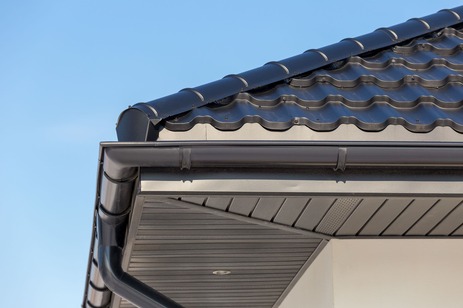
Autumn maintenance focuses heavily on drainage. Leaves and moss can quickly block gutters and outlets, causing water to overflow behind fascia boards or collect on flat roofs.
Expert tip: Gutters should be cleared before the period of heaviest rainfall. Overflowing water can affect brickwork, timber roofline and internal walls.
- Remove leaves from gutters and valleys
- Check that downpipes discharge correctly
- Clear flat roof outlets and hoppers
- Inspect roof valleys for trapped debris
- Check seals around roof windows and skylights
Winter Roof Maintenance
During winter, avoid walking on wet or icy roofs. Instead, monitor the property from ground level and inspect internal ceilings after severe weather.
- Check for slipped tiles after strong winds
- Look for damp patches or dripping water indoors
- Monitor flat roof ponding after heavy rain
- Arrange urgent repairs if water is entering the property
Gutter Maintenance
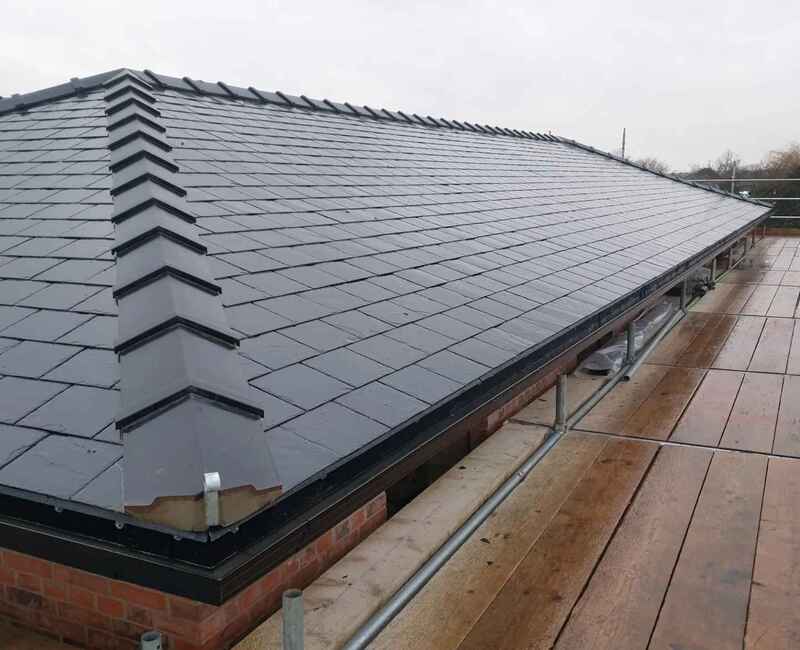
Gutters protect the roof edge, walls and foundations by carrying water away from the property. Blocked or leaking gutters can allow water to run behind fascia boards or down external walls.
What to check
- Leaves, moss and silt inside the gutter
- Loose joints or cracked sections
- Incorrect falls causing standing water
- Blocked downpipes
- Water marks on brickwork below the gutter
Flat Roof Maintenance
Flat roofs require clear drainage and regular surface checks. EPDM, GRP and felt systems all benefit from inspections after severe weather.
| System | What to inspect |
|---|---|
| EPDM | Edges, trims, seams, wall upstands and accidental punctures |
| GRP | Cracks, edge trims, joints and surface damage |
| Felt | Splits, blisters, lifting laps and worn mineral surface |
Remove loose debris carefully and make sure outlets remain open. If water stays in large pools after rain, the fall or deck condition may require inspection.
Pitched Roof Maintenance
Pitched roof maintenance should focus on tiles, slates, ridge details, valleys and underlay condition. Missing or cracked tiles should be replaced before water affects the battens and felt beneath.
- Check for cracked or slipped tiles
- Inspect ridge tiles and mortar
- Clear roof valleys
- Look for daylight or damp inside the loft
- Check verge and eaves details
Lead Flashing Maintenance
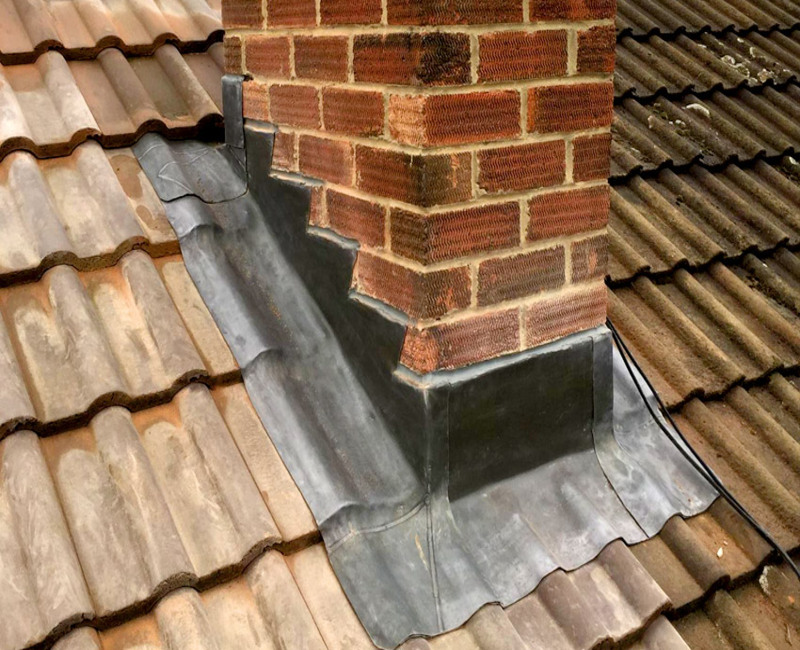
Lead flashing protects vulnerable roof junctions around chimneys, walls and valleys. Cracked pointing, lifted edges or poorly dressed lead can allow water behind the roof covering.
- Check that lead remains securely fixed
- Inspect mortar joints above flashing
- Look for splits or lifting edges
- Check chimney aprons and side flashings
Chimney Maintenance
Chimneys are exposed to wind and rain from every direction. Loose mortar, damaged pots and failed flashing can all cause leaks.
- Inspect pointing and brickwork
- Check chimney pots and caps
- Look for movement or cracked mortar
- Inspect leadwork around the chimney base
Warning Signs That Need Professional Attention
- Water stains on ceilings or walls
- Recurring leaks after previous repairs
- Soft or sagging roof areas
- Several missing or broken tiles
- Large cracks in flat roof surfaces
- Loose lead flashing or failing chimney mortar
- Overflowing gutters during rainfall
Safety note: Roof inspections involve working at height. Homeowners should not climb onto roofs without suitable equipment and experience. Many checks can be made from ground level or by a professional roofer.
Roof Maintenance Checklist
| Maintenance task | Recommended frequency |
|---|---|
| Clean gutters and downpipes | Twice a year and after heavy leaf fall |
| Inspect flat roof drainage | Every six months |
| Check lead flashing | At least once a year |
| Check tiles and slates | Annually and after storms |
| Inspect chimney pointing | Once a year |
| Check internal ceilings and loft | After severe rainfall |
| Professional roof inspection | When defects appear or the roof is ageing |
Why Choose Sparkling Roofing?
Sparkling Roofing Ltd provides roof inspections, roof repairs, flat roofing and maintenance services across London. We assess the visible roof covering, drainage, flashing, gutters and surrounding details before recommending work.
- Flat and pitched roof experience
- Gutter, flashing and chimney repairs
- Clear quotations before work starts
- Honest recommendations based on roof condition
- Service across London and surrounding areas
See our Roof Repairs London, Flat Roofing London, Roofing Services Putney and Roofing Services Wimbledon pages.
Frequently Asked Questions
Request a Roof Maintenance Inspection
Tell us about your roof and we will help you identify the maintenance or repair work it may need.