Flat roofing is a practical solution for extensions, garages, dormers, commercial buildings and many London properties. A well-designed and professionally installed flat roof can provide reliable protection for decades, but the result depends on the material, drainage, deck condition and detailing around walls and roof edges.
This guide explains the main flat roofing systems used in the UK, their typical lifespan, advantages, maintenance needs and the warning signs that indicate repair or replacement may be required.
What Is a Flat Roof?
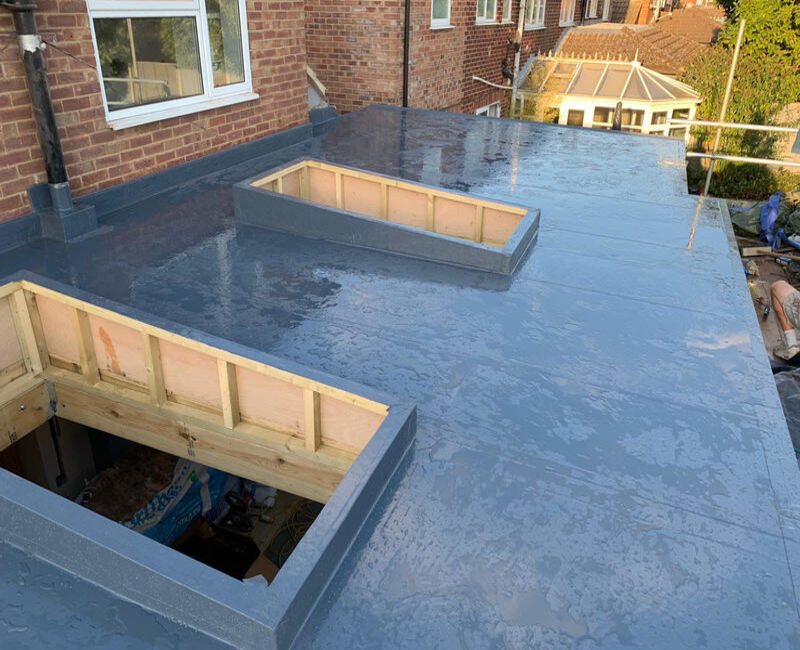
A flat roof is designed with a very low slope rather than being completely level. The slight fall directs rainwater towards a gutter, outlet or downpipe. Flat roofs are common on rear extensions, garages, porches, dormers and commercial properties.
Because the slope is low, waterproofing and drainage details are especially important. Water moves more slowly than it does on a pitched roof, so weak seams, blocked outlets or poorly formed falls can cause ponding and leaks.
Main Flat Roofing Systems
| System | Typical lifespan | Best suited for | Maintenance |
|---|---|---|---|
| EPDM rubber | 40–50 years | Large roofs, extensions and garages | Low |
| GRP fibreglass | 30–40 years | Garages, dormers and visible flat roofs | Low to medium |
| Modern felt | 15–20 years | Budget-sensitive roofs and smaller structures | Medium |
| Single-ply membrane | 25–35 years | Residential and commercial projects | Low |
EPDM Rubber Roofing
EPDM is a synthetic rubber membrane that is often installed in large sheets. Fewer joints mean fewer potential water-entry points. It remains flexible in changing temperatures and is widely used on domestic flat roofs.
Advantages of EPDM
- Long expected lifespan
- Flexible and resistant to thermal movement
- Low maintenance
- Suitable for large roof areas
- Repairs can often be completed locally
Things to consider
- Edge trims and wall upstands must be detailed correctly
- The deck should be clean, dry and structurally sound
- Drainage falls must be formed before installation
GRP Fibreglass Roofing
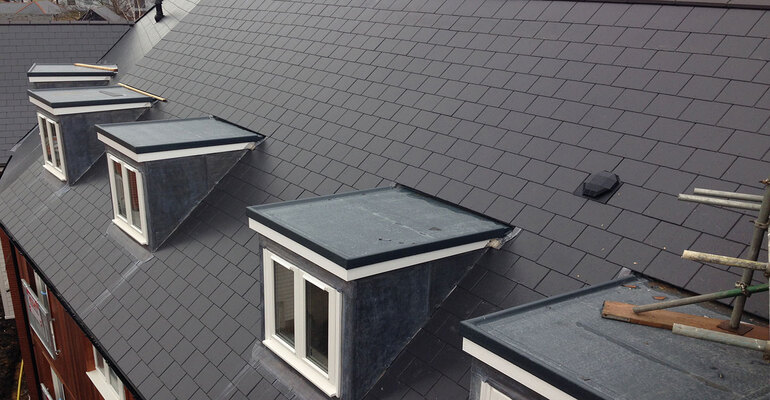
GRP creates a hard, seamless waterproof surface using fibreglass matting and resin. It offers a clean appearance and performs well on garages, extensions and dormer roofs when installed in suitable weather conditions.
Advantages of GRP
- Strong and seamless surface
- Attractive modern finish
- Good resistance to UV exposure
- Suitable for smaller and medium-sized roofs
- Available in different finishes
Things to consider
- Installation requires dry conditions
- The deck must be stable and correctly prepared
- Movement joints and perimeter details need careful planning
Modern Felt Roofing
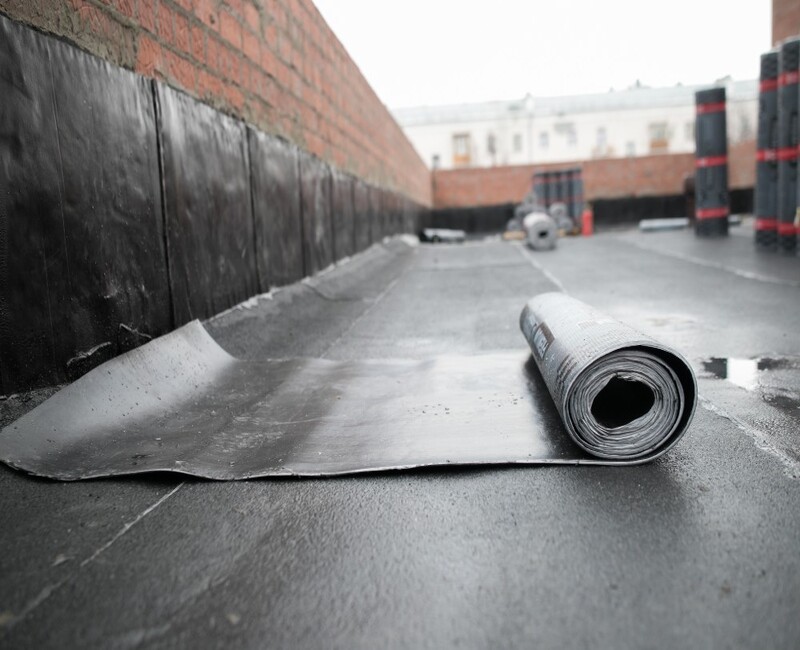
Modern torch-on felt systems use multiple reinforced layers and are significantly more durable than older basic mineral felt. Felt remains a practical choice for garages, sheds, extensions and smaller secondary roofs.
Advantages of felt
- Lower initial cost than many alternatives
- Suitable for many small flat roofs
- Can be repaired in local areas
- Available with a protective mineral finish
Things to consider
- Shorter lifespan than EPDM or GRP
- More seams and laps
- Requires regular inspection as it ages
EPDM vs GRP vs Felt
| Feature | EPDM | GRP | Felt |
|---|---|---|---|
| Lifespan | Excellent | Very good | Moderate |
| Flexibility | Excellent | Limited | Moderate |
| Appearance | Simple finish | Clean, premium finish | Traditional finish |
| Repairability | Good | Moderate | Good |
| Initial cost | Medium | Medium to high | Lower |
| Best use | Large roofs and extensions | Garages and visible roofs | Small and budget roofs |
Expert tip: The best flat roofing material is not always the most expensive one. The right choice depends on the roof size, deck condition, drainage, expected use and budget.
Flat Roof Design and Drainage
Even a premium membrane can fail if the roof does not drain correctly. A flat roof needs a suitable fall towards an outlet or gutter. The deck, insulation and waterproof covering must work together as one system.
Water should move towards a suitable outlet.
Leaves and debris must not block drainage.
The roof deck should be dry, stable and properly supported.
Wall junctions should rise high enough above the roof surface.
Perimeter trims should stop water entering beneath the membrane.
The roof build-up should control heat loss and condensation.
How Much Does Flat Roofing Cost in London?
Flat roofing prices vary according to roof size, material, access, deck condition, insulation and the amount of edge or wall detailing. A small straightforward garage roof costs less than a complex extension with multiple outlets, skylights and parapet walls.
| Cost factor | Why it affects the price |
|---|---|
| Roof area | More materials and labour are required |
| Existing roof removal | Old layers may need stripping and disposal |
| Deck replacement | Damaged timber or boards increase the scope of work |
| Access | Scaffolding or specialist equipment may be needed |
| Insulation | Upgraded insulation adds materials and installation time |
| Complex detailing | Skylights, walls, outlets and parapets require more work |
Signs a Flat Roof Needs Repair
- Water stains on ceilings or walls
- Standing water after rainfall
- Cracks, bubbles or splits in the surface
- Loose flashing around walls or rooflights
- Damaged edge trims
- Soft or sagging areas
- Recurring leaks after previous repairs
When Should a Flat Roof Be Replaced?
Local damage can often be repaired if the rest of the roof remains sound. Replacement may be more cost-effective when the roof is old, leaking in several places, sagging or showing widespread surface failure.
| Roof condition | Likely option |
|---|---|
| Small puncture or local flashing issue | Repair |
| One isolated leak on a younger roof | Repair |
| Several recurring leaks | Replacement may be better |
| Widespread cracking or blistering | Replacement |
| Damaged or sagging deck | Deck repair and roof replacement |
Flat Roof Maintenance Checklist
- Inspect the roof at least twice a year.
- Clear outlets, gutters and downpipes.
- Remove leaves and loose debris.
- Check seams, edges and wall upstands.
- Look for ponding water after rainfall.
- Inspect flashing around skylights and walls.
- Repair small defects before they spread.
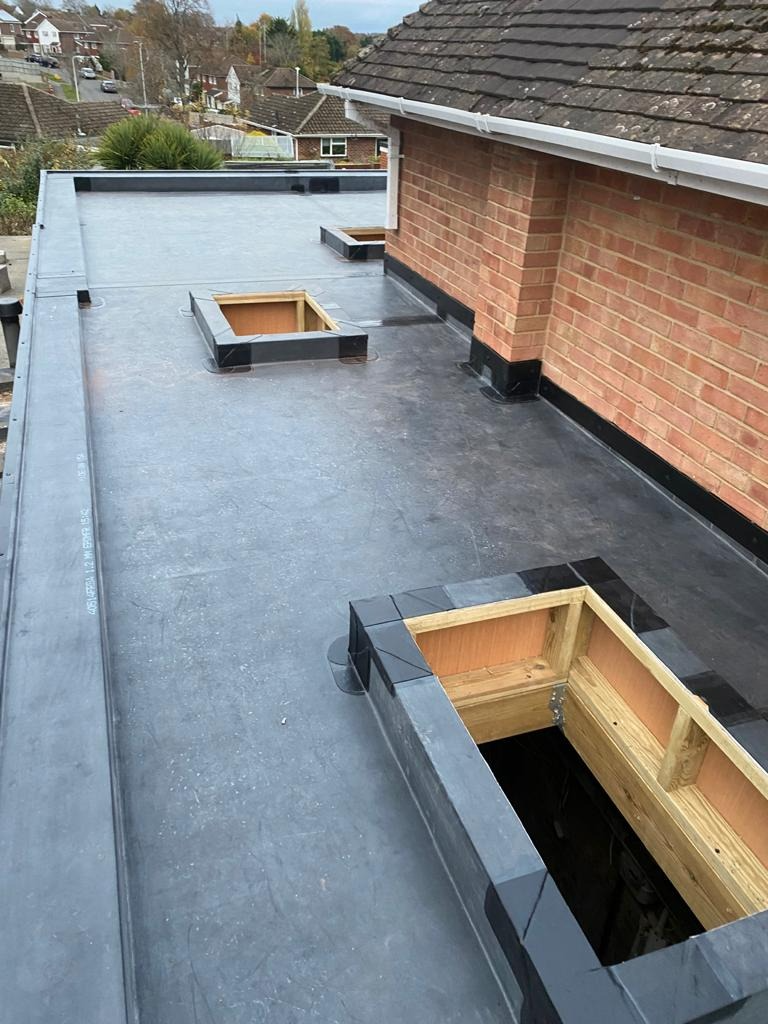
Real Project Spotlight: Drainage Improvement
During a recent flat roof inspection in South West London, our team found rainwater collecting around an outlet because the original roof fall was insufficient. The standing water had started affecting the roof surface and surrounding edge details.
The solution involved improving the drainage path, renewing weak waterproofing details and making sure water moved correctly towards the outlet. Addressing the underlying design issue was more effective than repeatedly patching the same area.
Common Flat Roofing Mistakes
- Installing a membrane over a damp or damaged deck
- Failing to create adequate falls
- Using sealant instead of proper flashing details
- Positioning outlets too high
- Leaving weak edges exposed
- Ignoring insulation and condensation control
- Walking on unsuitable areas without protection
Why Choose Sparkling Roofing?
Sparkling Roofing Ltd provides flat roofing, repairs and replacement services across London. We inspect the deck, drainage, edges, flashing and roof covering before recommending a suitable solution.
- EPDM, GRP and felt roofing experience
- Flat roof leak detection and repair
- Deck and drainage assessment
- Clear quotations before work starts
- Service across London and surrounding areas
Explore our Flat Roofing London, Roof Repairs London, Roofing Services Putney and Roofing Services Wimbledon pages.
Frequently Asked Questions
Request Flat Roofing Advice
Tell us about your flat roof and we will help you choose a suitable repair or replacement option.