How long does a flat roof last? In the UK, most flat roofs last between 15 and 50 years depending on the material, workmanship, ventilation, drainage and maintenance. A good installation can give decades of protection, but a poorly detailed flat roof can start causing leaks much earlier.
This guide explains the average lifespan of the most common flat roofing systems, the warning signs that your roof is failing, and how to decide whether repair or replacement is the better option.
Average Flat Roof Lifespan by Material
The material is one of the biggest factors in how long a flat roof lasts. Felt, EPDM rubber and GRP fibreglass all perform differently, and the best choice depends on the roof size, budget and how the roof is used.
| Material | Average Lifespan | Best For | Maintenance Level |
|---|---|---|---|
| Felt Roofing | 15–20 years | Budget-friendly flat roofs, extensions and repairs | Medium |
| EPDM Rubber Roofing | 40–50 years | Long-lasting waterproof flat roofs | Low |
| GRP Fibreglass Roofing | 30–40 years | Modern flat roofs, garages and extensions | Low to medium |
| Single Ply Membrane | 25–35 years | Residential and commercial flat roofing | Low |
Expert tip: The material matters, but the installation matters even more. Good edge detailing, correct falls, clean outlets and properly sealed upstands are what stop water finding a way inside.
How Long Does a Felt Flat Roof Last?
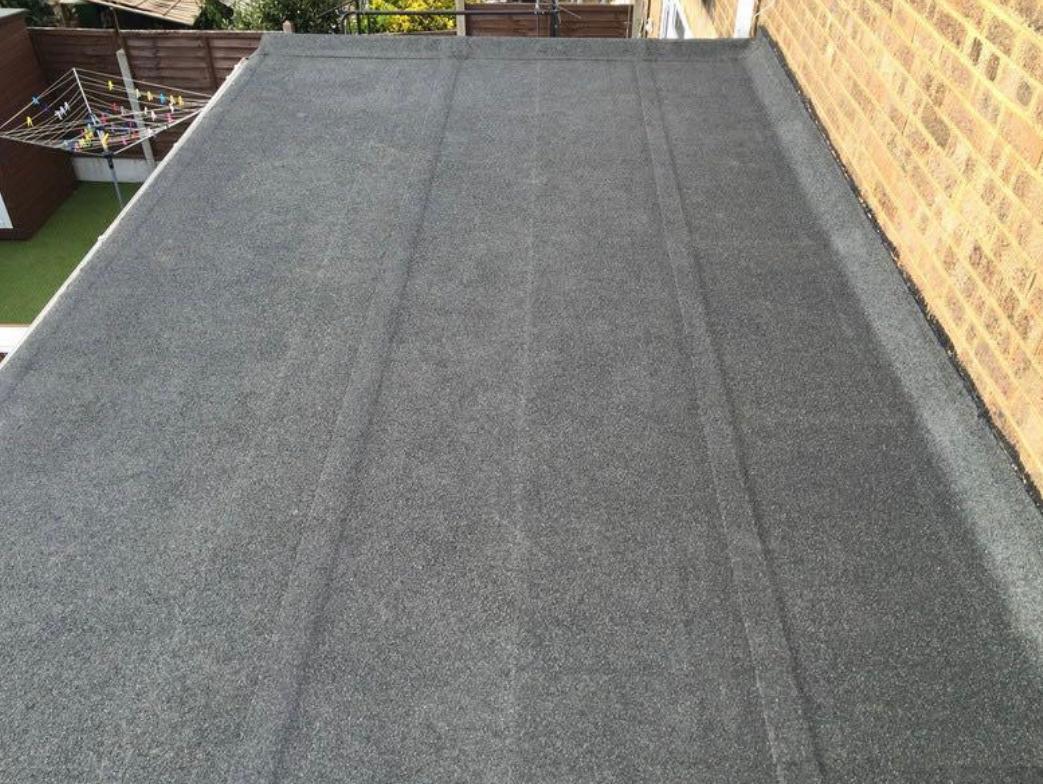
A traditional felt flat roof normally lasts around 15 to 20 years when installed correctly. Felt is often chosen because it is affordable and practical for garages, small extensions, dormers and older flat roofs.
Felt roofing may need attention earlier if there is ponding water, cracked edges, damaged laps or poor ventilation underneath. Small cracks and bubbles should be inspected quickly because water can travel under the surface before it becomes visible inside the property.
How Long Does an EPDM Flat Roof Last?
EPDM rubber roofing is one of the longest-lasting flat roof options. A professionally installed EPDM roof can last around 40 to 50 years. It is flexible, resistant to weathering and popular for homeowners who want a low-maintenance flat roof system.
The most important parts of an EPDM installation are preparation, adhesive coverage, edge trims, drainage and detailing around walls, skylights and pipes. If these areas are completed properly, EPDM can provide excellent long-term protection.
How Long Does a GRP Fibreglass Flat Roof Last?
GRP fibreglass roofing usually lasts around 30 to 40 years. It creates a hard, seamless surface and is commonly used on extensions, garages, bay roofs and modern flat roof projects.
GRP must be installed in the correct conditions. Moisture, poor preparation or incorrect resin application can reduce the life of the roof. When installed correctly, it gives a strong waterproof surface with a clean finish.
What Can Shorten the Life of a Flat Roof?
Flat roofs do not usually fail for one reason only. The most common problems are a combination of poor drainage, weak flashing, blocked outlets and delayed repairs.
Water sitting too long can weaken surfaces and seams.
Leaves and moss can stop the roof draining properly.
Weak details around edges and walls often cause leaks.
Loose leadwork or wall details allow water to enter.
Walking on weak areas can damage the membrane.
Sun, frost, wind and rain all affect roofing materials.
Signs Your Flat Roof Needs Repair
Many homeowners only notice a flat roof problem after water appears indoors. The earlier signs can often be seen outside before the leak becomes serious.
- Water stains on ceilings or walls
- Blisters, bubbles or splits on the roof surface
- Loose flashing around walls, chimneys or skylights
- Water pooling after rainfall
- Sagging roof deck or soft areas
- Moss, leaves or debris blocking outlets
- Damp smell inside the room below
Important: If you see water stains indoors, the leak may already have travelled through insulation or timber. A roof inspection can help find the true source before more damage happens.
Flat Roof Maintenance Checklist
Regular maintenance is one of the easiest ways to extend the life of a flat roof. You do not need to wait until there is a leak. A simple inspection once or twice a year can help prevent expensive damage.
- Check the roof after heavy rain and look for standing water.
- Clear gutters, outlets and downpipes.
- Remove leaves, moss and loose debris.
- Look for cracks, splits, bubbles or lifting seams.
- Inspect flashing around walls, chimneys and roof windows.
- Check edges, trims and upstands.
- Arrange professional repair if you notice any weak areas.
Should You Repair or Replace Your Flat Roof?
If the damage is small and the rest of the roof is in good condition, repair is often enough. However, if the flat roof is old, leaking in several areas or has widespread surface damage, replacement may be more cost-effective than repeated small repairs.
| Situation | Best Option |
|---|---|
| Small crack, local leak or loose flashing | Repair |
| Roof is under 10 years old and otherwise sound | Repair |
| Several leaks in different areas | Replacement likely |
| Old roof with sagging or widespread damage | Replacement |
| More than 30% of the roof is damaged | Replacement usually makes more sense |
Why Choose Sparkling Roofing?
Sparkling Roofing Ltd provides flat roofing, roof repairs and roof replacement services across London. We help homeowners choose the right solution based on the roof condition, budget and long-term protection.
- Flat roofing specialists for felt, EPDM and GRP systems
- Roof leak detection and repair
- Honest advice before any work starts
- Clear quotations and professional workmanship
- Serving London and surrounding areas
For related services, see our Flat Roofing London, Roof Repairs London, Roofing Services Putney and Roofing Services Wimbledon pages.
Frequently Asked Questions
Request Flat Roof Advice
Tell us about your flat roof and we will help you choose the right repair or replacement option.